-
Jan 14, 2026
-
Sheikh Navid Iftekher
Manual ISP billing may look simple, but it leads to revenue loss, billing errors, delayed payments, and higher admin workload. Learn the real cost.
Manual billing often feels like the cheapest option for small ISPs. A few Excel sheets, some notebooks, and basic tracking seem enough to keep things running. At the start, it works. Bills go out, payments come in, and the system feels manageable.
But over time, the cracks appear. Invoices get missed. Payments are recorded late. Admins spend hours checking spreadsheets instead of focusing on customers. What looked simple slowly turns into daily pressure.
The real cost of manual ISP billing is not visible on day one. It hides in wasted time, billing errors, delayed payments, and growing admin workload. These small issues build up and lead to revenue loss and unhappy subscribers.
This is where many ISPs get stuck. They keep fixing problems instead of removing the cause. Understanding these hidden costs is the first step toward better billing and healthier growth with systems like ISP Digital.
Manual Billing vs Automated Billing for ISPs
| Area | Manual Billing | Automated Billing |
|---|
| Invoice creation | Created by hand for each customer | Generated automatically on schedule |
| Payment tracking | Updated manually using Excel or notes | Updated instantly after payment |
| Admin workload | High, repetitive monthly tasks | Low, most tasks handled by the system |
| Billing errors | Common due to manual entry | Rare due to system checks |
| Payment reminders | Phone calls or manual messages | Automatic SMS or email reminders |
| Collection speed | Slow and inconsistent | Faster and predictable |
| Customer experience | Confusing invoices and delays | Clear bills and timely updates |
| Scalability | Breaks as subscribers grow | Handles growth without extra effort |
| Overall cost | Higher over time due to losses | Lower due to efficiency and accuracy |
Why Manual Billing Still Feels Affordable at First
Manual billing feels safe because it doesn’t demand much upfront. Small ISPs often start with a limited number of subscribers, simple packages, and familiar tools like Excel. At that stage, billing looks easy to manage without spending money on software.
Admins can track payments manually, send reminders by phone, and fix mistakes as they appear. Since volumes are low, these tasks don’t feel heavy. Many ISPs see this as a practical way to save money while getting started.
The problem is that this comfort doesn’t last. As subscriber numbers grow, billing cycles become harder to control. What once took minutes now takes hours. Errors increase, follow-ups pile up, and payment delays become common.
By the time ISPs realize manual billing is costing them more than it saves, the damage is already underway.
The Real Costs Hidden Inside Manual ISP Billing
Manual billing problems rarely hit all at once. They build up quietly over time. What feels manageable in the early months slowly turns into operational loss and billing risk as the ISP grows.
The cost is not just money. It shows up as wasted hours, missed revenue, unhappy customers, and compliance trouble. These issues don’t come from bad intent. They come from systems that can’t keep up.
Below are the most common areas where manual ISP billing creates hidden damage.
Time Lost on Repetitive Billing Tasks
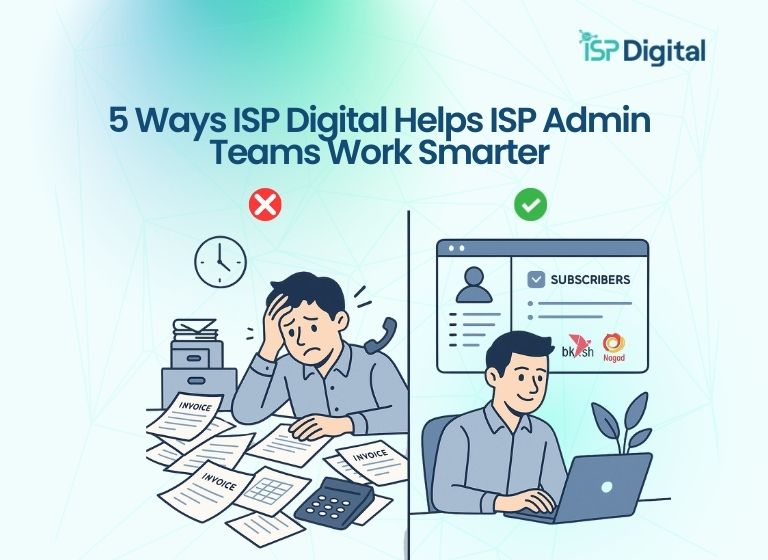
Every billing cycle pulls admin teams into the same routine. Creating invoices one by one. Copying numbers into Excel. Checking bank messages. Calling customers to confirm payments.
These tasks eat up hours every month. As subscriber numbers increase, so does the workload. What once took an afternoon now takes several days. Admin teams stay busy, but not productive.
Instead of helping customers or improving service, staff are stuck updating spreadsheets and fixing small mistakes. This time loss slows growth and increases burnout. With automated systems like ISP Digital, these hours can be redirected toward customer support and expansion.
Revenue Leakage from Billing Errors
Manual billing creates small errors that quietly reduce income. A missed invoice here. A wrong discount there. A renewal that never gets billed.
These mistakes don’t look serious at first, but they add up. ISPs lose money without realizing it. Some subscribers stay active without paying. Others are underbilled for months.
Because everything depends on human checks, errors slip through easily. Without automation, there’s no safety net. Over time, revenue leakage becomes a silent drain that’s hard to track and even harder to recover.
Delayed Payments and Slower Cash Flow
Manual billing slows down collections. Admins send reminders late or forget them entirely. Customers miss due dates simply because no one followed up on time.
There’s often a long gap between the billing date and the payment date. That gap hurts cash flow. ISPs struggle to cover bandwidth costs and salaries even when revenue exists on paper.
When billing systems support mobile wallets like bKash and Nagad, customers pay faster. Manual setups lack this convenience, which keeps payments delayed and unpredictable.
Higher Customer Complaints and Trust Issues
Billing mistakes directly affect customer trust. A paid customer getting disconnected. An unclear invoice. A due amount that doesn’t make sense. These issues frustrate subscribers quickly.
Once trust breaks, customers complain more and stay less. Support teams get overloaded with billing disputes instead of service requests.
Manual billing makes these situations common because records aren’t always accurate or updated on time. Rebuilding trust after repeated billing problems takes far more effort than preventing them in the first place.
Compliance and Reporting Risks
Manual records don’t hold up well during audits. Subscriber data becomes outdated. Payment history goes missing. Reports take days to prepare and still contain gaps.
For ISPs in Bangladesh, this creates serious BTRC compliance risks. Incomplete or inaccurate records can lead to penalties or warnings.
Systems like ISP Digital keep subscriber data organized and reporting ready. Manual billing lacks this structure, leaving ISPs exposed when compliance checks happen unexpectedly.
How Automation Removes These Hidden Costs
Automation fixes the problems that manual billing creates over time. Instead of repeating the same tasks every month, the system handles them in the background. Invoices go out on schedule, payments update instantly, and records stay accurate without constant checking.
With automated ISP billing software, errors drop, collections speed up, and admin teams regain control of their time. This shift removes the hidden costs that quietly hurt revenue and customer trust, while giving ISPs a billing system that works at scale.
Automated Invoicing and Payment Tracking
Automated invoicing removes guesswork from billing. Invoices generate on time for every subscriber, using the correct package, price, and billing cycle. Admins no longer need to create bills manually or worry about missing customers.
Payment tracking also becomes simple. As soon as a subscriber pays, the system updates the account automatically. There is no need to cross-check bank messages or update Excel files.
With ISP Digital, payments through bKash and Nagad reflect in real time. Admin teams always know who has paid and who hasn’t, without extra effort or delays.
Faster Collections with Local Payment Integration
When customers can pay easily, they pay faster. Local payment integration shortens the gap between invoice date and payment date. Subscribers use familiar mobile wallets instead of waiting for manual follow-ups.
Automated billing systems connect directly with gateways, so payments are confirmed instantly. Admins don’t need to call customers or verify transactions one by one.
This convenience benefits everyone. Customers enjoy simple payments, and ISPs see steadier cash flow with fewer overdue accounts.
Accurate Control with Mikrotik and OLT Sync
Billing and network systems must stay aligned. Without proper sync, paying customers can get disconnected, and overdue accounts may stay active. Manual checks make these mistakes common.
Automation fixes this by keeping subscriber status consistent across billing and network devices. When a payment is made, access stays active. When a bill remains unpaid, suspension happens correctly.
With ISP Digital syncing data through Mikrotik and OLT, admin teams avoid wrong disconnections and reduce customer complaints.
Built-In BTRC-Ready Records and Reports
Compliance becomes much easier with automation. Subscriber data stays updated, payment history remains complete, and reports are ready when needed.
Manual records often fail during audits due to missing or outdated information. Automated systems remove that risk by maintaining structured records at all times.
For ISPs in Bangladesh, BTRC-ready reporting brings peace of mind. Admins spend less time preparing documents and more time running the business confidently.
Frequently Asked Questions (FAQs)
What is manual ISP billing?
Manual ISP billing uses tools like Excel, notebooks, or basic software to manage invoices and payments by hand. It relies on human checks and follow-ups.
Why is Excel billing risky for ISPs?
Excel billing leads to missed invoices, delayed updates, and data errors. As subscriber numbers grow, these risks increase and become harder to control.
How does automation reduce billing errors?
Automation removes repetitive manual steps. Invoices, reminders, and payment updates happen automatically, which reduces mistakes and keeps records accurate.
Does automated billing support bKash and Nagad?
Yes. Modern billing systems integrate with bKash and Nagad, allowing subscribers to pay easily while updates reflect instantly in the system.
Is automated billing required for BTRC compliance?
While not mandatory, automated billing makes BTRC compliance much easier by keeping subscriber records complete and reports ready.
Can small ISPs afford billing software?
Yes. Billing software like ISP Digital often costs less than the hidden losses caused by manual billing, especially as the ISP grows.
Ready to Stop Paying the Hidden Cost?
Manual billing may look affordable, but over time it drains time, revenue, and customer trust. Every missed invoice, delayed payment, and billing error adds to the real cost of staying manual.
Automating billing replaces these risks with consistency and control. Payments move faster, records stay accurate, and admin teams work with confidence instead of stress.
ISP Digital helps ISPs make that shift. Request a demo today and see how automated billing removes hidden costs and supports steady growth.


.jpg)
.jpg)